
Plyometric exercises prepare the surprise element. That play that happens so fast, your opponent is left standing still and the crowd is still catching up to what you just did. Those tiny milliseconds that flip a scoreboard.
What difference does it make to run 5% faster or jump 9% higher? Everything. That’s the edge elite plyometrics training delivers. A dream draft. A career-defining play. A championship sealed in one explosive move.
Soccer, basketball, football, or running. In all of them, every inch and every millisecond counts.
Here we’ll break down the best plyometrics exercises and jump training drills, backed by research and real results. Warm up, because today you start plyometric training the way top athletes do.
What Are Plyometrics Exercises?
Plyometrics are exercises that train your muscles and joints to contract and extend at high speed. This type of jump training gives athletes the ability to apply significant force in a very short time.
In simple words, plyometrics builds explosive power. Think about any quick game move, like a sprint, a tight basketball jump shot, or a soccer kick under pressure. You absorb force, load, and explode again in milliseconds.
To pull off those lightning-quick actions, your muscles, tendons, and joints need to fire in perfect sync. That comes from the three phases of plyometrics:
- Eccentric: Muscles lengthen to absorb force.
- Amortization: The rapid transition.
- Concentric: Muscles shorten to explode into the next movement.
With plyometric drills you fine tune your neuromuscular connection. You teach your body to load, react, and move in one smooth, powerful sequence. This is why plyometric exercises are essential for sports conditioning that makes elite performance.
Plyometric Training improves running mechanics, posture, balance, coordination, and fast force absorption. It’s really a whole-body system, a precise chain of muscles and joints firing together at high speed.
That’s something that our personal training team is an expert on: focus to get that extra power, when you need it, how you need it. Across any sport, that’s how we came up with the next plyometric exercises examples, specific for sports, coming on now.
Benefits of Plyometrics for Athletes
Plyometric training improves speed, strength, balance, and total-body control. But here’s to make plyo workouts truly effective, you need to train all three phases of the stretch-shortening cycle: Eccentric control. A fast amortization phase. Explosive concentric power.
Rather than isolated movements, we are training movement patterns. Here are the main performance benefits of plyometric training, backed by research:
- Sprint Faster: 4% to 5% improvement. Controlled studies on field-sport athletes found that just six weeks of plyometric training made players run 4% to 5% faster.
- Sharper Agility: Direction changes up to 10% faster. A review of team-sport research found that athletes improved change-of-direction speed by about 9% to 10%, especially when programs included both single-leg and double-leg plyometric drills.
- Higher Vertical Jump: Up to 9%. Across multiple sports like soccer, basketball, volleyball, and handball, plyometric programs consistently increased vertical jump height by around 8% to 9%.
- Huge Boost in Explosive Power: +28%. A controlled experiment on sprinters showed a 28.5% increase in explosive power after six weeks of plyometric work. Even after stopping training for two weeks, athletes maintained about an 18% improvement.
- Reduce Risk of Injuries by 60%. A meta-analysis of injury-prevention programs found that warm-ups including plyometric exercises reduced ACL injuries by about 60%. The protection was even stronger for non-contact ACL injuries, which are the most common type.
Each sport has different physical demands. Next, we’ll walk through the best plyometric exercises for speed, and then our top plyometric drills for basketball, soccer, volleyball, and football.
Plyometric Training for Speed
Runners and sprinters, ready to train for high velocity and smooth top-end mechanics? These five plyometrics exercises for speed build explosive acceleration, stride power, and quick turnover.
Power Skip for Distance
This drill is a forward skip with high knees and strong ground pushes. It trains the glutes, hip flexors, calves, and Achilles for explosive forward drive.
- Drive your knee high.
- Push hard into the ground.
- Skip forward for maximum height and distance.
- Stay tall and explosive with every skip
Straight-Leg Bounds
This is a long-stride bounding drill with straight legs and fast, elastic foot strikes. It works the hamstrings, calves, and ankles to build stiff, reactive contacts.
- Keep your legs mostly straight.
- Strike the ground under your hips with fast, stiff contacts.
- It should be like a quick touch, long stride.
- Maintain a tall posture the whole time.
Alternating Leg Bounds
This drill exaggerates running mechanics with big knee drive and long pushes. It trains the glutes, quads, hip flexors, and core for powerful stride length.
- Run with long, powerful strides.
- Big knee drive and long, strong pushes.
- Cover ground without losing control or form.
- Smooth rhythm, steady forward momentum.
Ankle Hops
These small forward hops use only your ankles to create quick, springy contacts. They strengthen the calves, tibialis anterior, Achilles tendon, and foot muscles.
- Bounce on the balls of your feet with tiny, rapid hops.
- Knees stay almost straight.
- Let your ankles snap the movement.
- Aim for fast, light ground contacts.
Depth Jumps
This drill teaches your body to react fast on landing and explode upward. It trains the Achilles, quads, glutes, and the full stretch-shortening cycle.
- Step off a box and land softly.
- The moment you touch the ground, jump as high as possible.
- Keep it reactive. Fall, land, explode.
- Focus on minimal time on the ground.
Plyometric Jump Training for Basketball
Train specific movements for blocking, rebounding, and beating defenders off the floor. These five basketball plyometric drills work on vertical jump power, lateral quickness, and fast takeoffs.
Double Leg Forward and Backward Hops
This drill trains quick ground reactions and balanced landings in both directions. It works the quads, calves, glutes, and ankles to keep your legs springy and stable.
- Hop forward and backward on two feet.
- Stay light and quick on your landings.
- Keep your chest up and your feet under you.
- Focus on soft landings and fast takeoffs.
Side to Side Hops
This drill builds lateral explosiveness, the kind you need for defense slides and quick changes of direction. It targets the ankles, glutes, and hips for side-to-side stability.
- Keep your feet together.
- Bounce side to side in a smooth rhythm.
- Stay low like you’re in a defensive stance.
- Let your ankles and hips drive the spring.
Single Leg Squat Jumps
This move strengthens each leg independently to build balance and vertical power. It challenges your glutes, quads, core, and ankle stabilizers.
- Start in a small single-leg squat.
- Explode straight up.
- Land softly on the same leg.
- Reset your balance before the next jump.
Skater Jumps
A lateral power drill that mimics game-speed direction changes. It builds strength in the glutes, hips, and outer thigh muscles that keep you stable on cuts.
- Jump sideways from one foot to the other.
- Stick each landing with control.
- Keep your hips low and chest tall.
- Push off hard into each new jump.
Single Leg Bounding
This drill teaches you to create power and distance off a single leg, just like a fast takeoff in traffic or a drive to the rim. It trains hip extensors, glutes, calves, and core control.
- Drive forward with big strides on one leg.
- Push long with each bound.
- Keep your torso tall and stable.
- Stay smooth through the whole sequence.
Plyometric Drills for Soccer Players
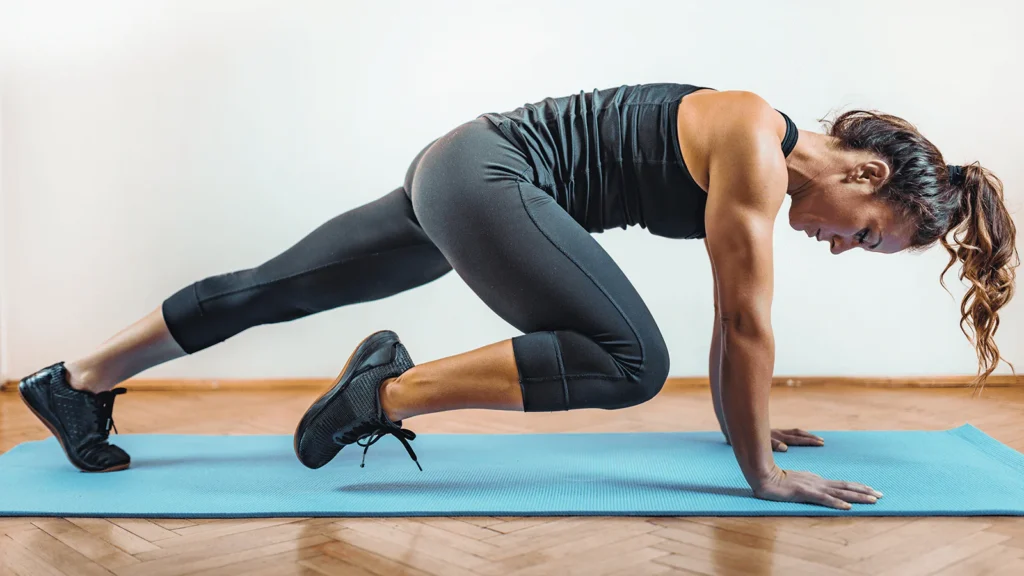
Soccer players need to sharpen acceleration, cutting ability, explosive first step, and rotational power. These 5 plyometric exercises are what you need for fast shooting, passing, and winning headers.
Ankle hops
Yes, we are repeating this drill but now for soccer! It’s essential for next level acceleration and top air plays. This strengthens the calves, tibialis anterior, Achilles tendon, and foot muscles.
- Stand tall on the balls of your feet.
- Bounce quickly with very little knee bend.
- Keep ground contacts short and light.
- Stay relaxed in the upper body.
Jumping lunges
A powerful drill for single-leg strength and control, key for striking, sprinting, and deceleration. It targets the quads, glutes, and hip flexors.
- Start in a lunge stance.
- Jump straight up and switch legs mid-air.
- Land softly into the opposite lunge.
- Keep your balance before exploding again.
Horizontal squat jumps
This exercise trains horizontal force, the kind you use in sprints and quick bursts forward. It hits the glutes, quads, and core for power and stability.
- Start in a squat position.
- Jump forward explosively.
- Land in a stable squat and rebound right away.
- Focus on covering ground while staying controlled
Single-leg lateral bound hops moving forward
This drill builds lateral and forward power together, mimicking defensive slides and diagonal cuts. It works the glutes, hips, and ankle stabilizers.
- Balance on one leg.
- Push sideways and slightly forward to the opposite leg.
- Stick the landing with control.
- Find your rhythm and repeat down the field
Rotational jumps
A key drill for rotational power used in shooting, passing, and quick turns. It strengthens the hips, core, and ankles while improving body control in the air.
- Stand in an athletic stance.
- Jump up explosively and rotate 90 or 180 degrees.
- Land softly facing the new direction.
- Control your rotation before the next rep.
Plyometric Jumps for Volleyball
Get ready to build the reactive power you need for blocking and spiking. These five volleyball jump training exercises boost your vertical, strengthen your landing-to-takeoff transitions.
Dumbbell Snapdowns
This drill teaches you to drop fast into an athletic stance, the same motion you use before a block or jump. It builds hip strength, trunk control, and quick ground prep.
- Hold light dumbbells at your sides.
- Snap your hips down fast into an athletic stance.
- Keep your chest tall and your feet strong.
- Reset and repeat with control.
Snapdown Jumps
This drill adds vertical explosiveness to the snapdown pattern. It trains your hips, quads, calves, and core for fast, powerful takeoffs.
- Drop into a quick snapdown.
- Explode straight up into a jump.
- Land softly and reset your balance.
- Add dumbbells only once your landing is solid.
Pogo Jumps
A simple but effective drill to train ankle stiffness and quick reaction time. It strengthens the calves, Achilles tendon, and foot muscles needed for rapid jumps.
- Bounce on the balls of your feet.
- Keep your knees mostly straight.
- Let your ankles create the spring.
- Stay quick, light, and rhythmic.
Drop Jumps from box
This exercise trains your stretch-shortening cycle for reactive vertical jumps. It teaches you to land soft and explode immediately.
- Step off a box, don’t jump.
- Land softly with good posture.
- Jump as high as you can right away.
- Focus on fast, minimal ground contact.
Accelerated Two Step Approach
This drill matches the real approach pattern to a spike or block. It builds timing, rhythm, and powerful takeoff mechanics.
- Take two fast approach steps.
- Let the last step load your hips.
- Jump high like you’re going for a hit.
- Keep it smooth and explosive
Plyometric Exercises for Football
Sprint, tackle, and beat opponents off the line. These five plyometrics for football build explosive hip extension, fast directional changes, and the lower-body power; at NFL level.
Kneeling Box Jump
This drill teaches pure hip extension and full-body explosiveness from a dead stop. It trains the glutes, quads, and core to fire hard without a running start.
- Start on your knees in front of the box.
- Swing your arms and explode to your feet onto the box.
- Land softly and balanced.
- Reset with control.
Seated Broad Jump
This exercise lets your legs do all the work. It targets the glutes, hamstrings, and quads for long, powerful horizontal pushes.
- Sit on a bench or box.
- Lean forward and launch into a long jump.
- Land softly and stable.
- Walk back and repeat.
Hurdle Hops
A great drill for quick, reactive power and coordination. It works the calves, ankles, and hips to sharpen foot speed and rhythm.
- Hop over low hurdles in a smooth line.
- Stay on the balls of your feet.
- Keep your bounce fast and light.
- Maintain a steady forward rhythm
Single Leg Box Jump
This drill builds unilateral power for sprinting and cutting. It challenges the glutes, quads, and ankle stabilizers on each leg.
- Jump onto the box using just one leg.
- Step down with control.
- Switch legs every rep.
Alternating Lunge Jumps
A strong builder for hip extension, quad strength, and landing control. Great for improving tackling form and explosive acceleration.
- Drop into a lunge.
- Jump straight up and switch legs in the air.
- Land softly into the opposite lunge.
How P1 Athlete Supports Your Plyometric Training
Our team has spent more than 20 years coaching athletes across football, basketball, soccer, volleyball, and track. We know exactly how to use plyometric training to build real power, not just big jumps in the gym.If you’re ready for pro plyometrics workouts, our team is ready to train with you. Become a member today and let’s turn your explosive potential into real on-field performance.
