
Runners put a lot of pressure on their legs and feet. So when the pain appears, the first thought is usually the usual suspects: Achilles pain, shin splints, or sore calves. But as mileage builds, another type of pain can show up, one that runners know too well: that sharp soreness on the side of the foot after a run.
What’s the cause of pain on the foot? You probably know the broad answer: overuse. But the real “how” matters.
Plantar fasciitis is often the go-to diagnosis for foot pain in runners. But when the pain is located on the side of the foot, most likely is something else. Here’s what may really be behind that soreness, and how to recover so you can get back on track.
Understanding Foot Pain After Running
First of all, where does that overuse that causes foot pain come from? Most of the time, it shows up after some kind of shift, be that more mileage, more intensity, or a tougher route. When pain appears on the side of the foot, we’re usually looking at an overload of specific tissues. Tendons, bones, or support structures are taking more stress than they can handle.
Things like following the 10% rule, choosing the right footwear, and checking your running technique all play a role. We’ll get into that later.
But before we do that, let’s focus on what matters most here: where the pain shows up. Outer side, or inner side? That gives us strong clues about what’s going on.
Pain in the outer side of the foot
When pain shows up along the outside of the foot, we are probably looking into these two common causes:
- If the pain runs along the outer foot and ankle, it’s often peroneal tendon irritation. This usually feels like a dull ache or soreness during or after running. These tendons help stabilize your foot during push-off and on uneven ground, so they can get overloaded with increased mileage or poor mechanics.
- If the pain is more localized along the outer edge of the foot, especially around the 5th metatarsal, it could be a stress fracture. This feels sharper and more pinpoint. It builds over time and tends to worsen with impact. It’s not a sudden break, but a small crack caused by repetitive stress.
Another possible cause is cuboid syndrome, which affects a small joint on the outer midfoot. This can create aching or sharp pain during push-off and is often mistaken for tendon issues.
Now, you might be wondering: could this be plantar fasciitis? It’s usually not the main cause here. But it can play a role indirectly. When heel or arch pain lingers, runners often change how they load the foot to avoid discomfort. That shift can place extra stress on the outer edge, increasing irritation.
Pain is in the inner side of the foot
Let’s now see what causes pain on the inner side of the foot:
- If the soreness or pain runs along the arch or just behind the ankle, it’s often posterior tibial tendon irritation. This tendon supports your arch. When it becomes overloaded, you’ll feel aching or tenderness along the inside of the foot. Over time, this can affect arch support and overall foot alignment.
- If the discomfort feels deeper in the arch, it may be related to flatfoot mechanics or reduced arch support. This is when the arch isn’t absorbing load properly, the inner side of the foot takes on more stress, leading to pain or swelling.
- Another contributor can be bunions at the base of the big toe. They create pressure along the inner edge of the foot and can gradually change how weight is distributed, increasing strain on the arch and surrounding structures.
Why Does Foot Hurt on the Side?
So, to recap: When pain shows up on the outer side, the most common cause is peroneal tendon irritation. In some cases, it may point to a stress fracture, especially if the pain is sharp and localized. Sometimes, plantar fasciitis can contribute indirectly by shifting how you load your foot.
When pain shows up on the inner side, the most common cause is posterior tibial tendon irritation. In other cases, it’s related to arch mechanics or reduced support.
Different location, different cause. That’s why understanding where your foot hurts is key to fixing it.
Immediate Relief & Home Care
You finished your run, cooled down… and there it is. That soreness on the side of your foot. So, what do you do now?
Here’s what you can do to manage the issue and get some relief:
- Use relative rest, not complete rest: You don’t need to stop all activity. Instead, reduce intensity or mileage while staying active within pain-free limits. This helps recovery without losing your rhythm. From there, you can gradually build back up using the 10% rule.
- Apply ice for pain management: Ice can help reduce soreness, especially in the early stages. Just remember, it’s mainly for symptom relief.
A simple trick is using a frozen water bottle and rolling your foot over it. It feels great and helps with inflammation. Don’t overdo it. About 5 minutes, up to 3–4 times a day, is enough.
- Check your footwear: Make sure your running shoes match your foot type, provide enough support, and aren’t worn out.
- Use soft tissue work for relief: Massage or rolling the foot can help reduce stiffness and improve comfort. But keep in mind, this supports recovery. You still will have to adjust your run load.
Recovery Exercises & Stretches
As for recovery, physical therapy is always tailored to the injury, pain levels, and what each person can handle. Still, most effective routines focus on the same idea: working both sides of the foot, building calf strength, and improving overall foot stability.
Here’s an overview of what our physical therapy team at P1 uses to address pain on the side of the foot:
Peroneal strengthening With Resistance Band
- Sit on the floor or in a chair with your leg extended. Loop a resistance band around the front of your foot and anchor the other end toward the inside.
- Slowly push your foot outward against the band, as if you’re turning the sole away from your body. You should feel the muscles along the outer side of your foot and ankle working.
- Return with control. Repeat 10–15 times on each foot.
Posterior tibial strengthening With Resistance Band
- Sit on the floor or in a chair with your leg extended. Loop a resistance band around the front of your foot and anchor the other end toward the outside.
- Slowly draw your foot inward, slightly lifting the arch as you move against the band. You should feel the effort along the inner side of your foot and ankle.
- Return with control. Repeat 10–15 times on each foot.
Heel raises
- Stand behind a sturdy chair or hold onto a wall for support.
- Slowly lift your heels off the ground, rising onto your tiptoes.
- Hold for 2–3 seconds, then lower your heels back down gently.
- Repeat 10–15 times, gradually increasing reps as your strength improves.
Calf stretches
- Stand facing a wall and place your hands on it for support.
- Step one foot forward while keeping the other back, both heels flat on the ground.
Lean forward slightly until you feel a stretch in the back of your lower leg. - Hold for 20–30 seconds, then relax.
- Repeat 2–3 times on each side.
Resistance band foot pushes
- Sit on the floor or in a chair, and loop a resistance band around the ball of your foot. Hold the other end securely with your hands.
- Push your foot forward against the band, extending it as far as you can without discomfort.
- Slowly return to the starting position.
- Repeat 10–15 times.
Towel curls
- Sit in a chair with your foot flat on the ground and place a small towel in front of you.
- Using only your toes, grip the towel and scrunch it toward you.
- Release and repeat 10–15 times on each foot.
Preventing Future Pain
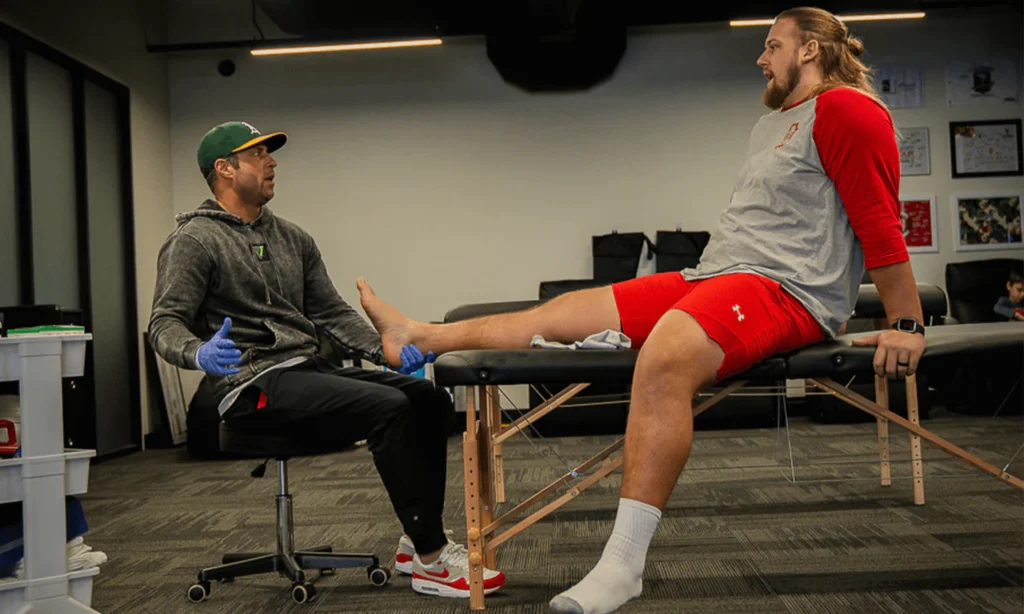
Now you know how to treat the pain in the short term, and you have an overview of the exercises. So, how do you prevent pain on the side of the foot from coming back?
Two main things: how you increase your runs, and how you prepare and recover from them.
- For warm-ups, spend about 5 to 10 minutes on exercises and stretches that loosen the calves, improve mobility through the ankles and knees, and activate your core. By the time you start running, your body should feel loose, stable, and ready to handle the impact.
- After your run, take another 5 to 10 minutes to cool down. Keep it simple, with a slow walk to bring your heart rate down. Then, add light stretching for the calves and feet to reduce stiffness and support recovery.
Now, let’s look at the real source of most running-related foot pain: training load.
A simple and safe way to increase your running routine is the 10% rule. Instead of big jumps, increase your weekly mileage by no more than about 10%. This gives your foot time to adapt and helps prevent overload.
For example: if you’re running 3 miles, your next step would be 3.3 miles. And if your goal is a marathon distance, like 26 miles, you build toward it gradually over time.
Now, let’s circle back to running technique. As we covered in our article on biomechanical analysis, your gait determines how force is distributed with every step:
During the stance phase, your foot absorbs impact while your lower leg stabilizes the movement. As you push off, your calves and foot muscles generate force to move you forward.
Each step sends force up the chain. When timing and mechanics are right, that load stays balanced and controlled. When they’re not, certain areas, like the side of the foot, start to take more stress than they should.
Does Your Foot Hurt on the Side? Get Expert Help
So, if your foot hurts on the side after running, now you know it’s not always the same thing. Outer side, inner side, different causes, different fixes.
In most cases, it comes down to overuse, load, and how your foot is handling it. The good news is that with the right exercises and adjustments, you can get back on track.
But if the pain keeps showing up, isn’t improving, or starts limiting your runs, don’t ignore it. If you feel pain on the side of your foot after each run, or you just want to improve your technique and prevent it, you’re in the right place.P1 is Utah’s go-to performance center, with a 20+ year expert team ready to help. Become a member today, start building those miles again.
