
With the 2026 FIFA World Cup just around the corner, here at Performance One we wanted to revisit one of the greatest comebacks in soccer history. In particular, Ronaldo Nazário’s recovery journey after his famous knee injury. The story of Brazil’s “Phenomenon,” R9.
Ronaldo is a two-time world champion. First in 1994 here in the United States, then again in 2002 in Korea and Japan. At his peak, Ronaldo was almost scoring one goal per game.
But apart from his incredible skills with the ball, why talk about R9? Because the Ronaldo knee injury story is also one of the greatest examples of recovery after knee injury in professional sports. A devastating injury that nearly took his career away during his prime years.
Let’s go over how Ronaldo overcame his grade 4 knee injury through a long recovery process, extended physiotherapy sessions, and unique determination. His ultimate dream? Winning Brazil’s fifth World Cup.
Understanding Knee Injuries in Athletes
In our article about recovery work, we ranked knee injuries as the third most common sports injury. Especially in professional soccer, knee sprains and ligament tears are extremely common. Severe tears can even threaten to end an athlete’s career.
For Ronaldo, that fear became reality.
R9 suffered two major knee injuries during his career. The first came while playing for Inter Milan in 1999 and 2000. The second happened in 2008 while playing for AC Milan. Both were patellar tendon ruptures.
The first injury affected his right knee and nearly cost him his chance to play in the 2002 FIFA World Cup. The second was in his left knee and eventually led to the end of his elite European career.
To understand the severity of the Ronaldo knee injury, we need to understand the patellar tendon itself. This tendon connects the kneecap to the shin bone and plays a major role in running, jumping, sprinting, and kicking. A complete rupture is considered a grade 4 knee injury, meaning the tendon tears completely away from the bone.
This type of knee injury rehab is long and demanding. Athletes often need surgery followed by more than a year of sports rehabilitation and physiotherapy. In many cases, they must relearn how to walk, run, jump, and perform explosive movements again.
When Ronaldo suffered his complete right patellar tendon rupture in 2000, many believed his career was over. Even more, winning the 2002 World Cup with Brazil, seemed impossible.
They were wrong.
The Role of Physiotherapy in Recovery<H2>
The Role of Physiotherapy in Recovery
Ronaldo suffered his first partial patellar tendon tear in 1999 while playing for Inter Milan. Doctors repaired the injury, but after that, the recovery moved too fast and went back to play when he really wasn’t ready.
He initially returned after only five months of recovery. But, when he returned, his right knee simply was not ready yet.
In 2000, just six minutes into his return match, Ronaldo tore the tendon again in one of the most painful scenes in soccer history. Ronaldo later described the feeling as if his knee had “exploded.” It was a complete grade 4 rupture in his right knee. Even his physical therapist called it one of the worst injuries he had ever seen.
Everything stopped there. If the first injury wasn’t the end, this seemed more like it.
After such a severe injury, Ronaldo faced one of the hardest challenges in professional sports: recovery from a complete patellar tendon tear, to return to the highest level of soccer. He had less than two years to recover, rebuild his body, and earn a spot in the 2002 FIFA World Cup in Korea and Japan.
Missing the 1998 World final set a burden on him, but he was determined to play again the championship.
He spent nearly two full years away from competitive soccer.
Ronaldo’s First Knee Injury Recovery
After the complete rupture in 2000, Ronaldo underwent surgery to reattach the patellar tendon around the kneecap area. From there, his knee injury rehab became a long step-by-step process.
- 0 to 6 weeks: Rest and protection. Ronaldo wore a knee brace and slowly started putting weight on the leg again while relearning basic walking movements.
- 3 to 6 months: Strength and mobility work. At this stage, physiotherapy for athletes focuses on restoring range of motion while rebuilding strength around the knee, hips, and quads.
- 9 to 12 months: Return to athletic movement. Ronaldo gradually moved into jogging, running, sprinting, and eventually soccer-specific actions like cutting, changing direction, and kicking.
This is what we can see in the documentary Broken Knees, Unbroken Dream | Ronaldo, The Phenomenon, covering all his rehabilitation process. With patience, Ronaldo worked to rebuild strength, stability, and confidence in the knee.
His rehab included exercises like:
- Quadriceps isometric sets
- Straight leg raises
- Seated knee extensions with resistance
- Hip abduction exercises
- Leg presses
- Hamstring curls
These movements helped Ronaldo rebuild muscle control and prepare the knee for the explosive demands of professional soccer again.
The full recovery took almost two years. Time was one of his biggest concerns, the FIFA championship was coming, with the chance to fulfill his dream.
The recovery was hard both at a physical and psychological level. He was rebuilding his knee from scratch, literally relearning how to walk. Also, he had to prove in the field that he still was R9, The Phenomenon.
Ronaldo fought his way back just in time to convince both Inter Milan manager Héctor Cúper and Brazil coach Luiz Felipe Scolari that he still belonged at the top level.
Then came the 2002 FIFA World Cup. Ronaldo returned only 40 days before the tournament. He made it into the national team, and accomplished but many though was impossible. Brazil won its fifth World Cup title, and R9 completed one of the greatest comebacks in sports history.
Ronaldo’s Second Knee Injury
After the 2002 World Cup, Ronaldo continued playing at the highest level in Europe. He played in Spain before returning to Italy with AC Milan. Even though injuries had reduced some of his explosiveness, Ronaldo still performed at an elite level.
Then, in 2008, another disaster struck. Ronaldo tore the patellar tendon in his left knee during a match for AC Milan. Once again, he faced surgery, months of rehab, and a long road back through physiotherapy and strength training.
This time, though, this second major knee injury ended his run in the elite European league. At the end of 2008, Ronaldo returned to play in Brazil with Corinthians. He had an important role in the club’s return to the first division, but his performance was in clear decline.
In 2011, Ronaldo officially retired from professional soccer. A true legend who gave the world some of the greatest plays in soccer history and showed athletes what recovery at the elite level truly demands.
Ronaldo’s Recovery Journey
As we mentioned before, a patellar tendon rupture is a grade 4 knee injury that can end an athlete’s career. An injury that can be indeed devastating.
Ronaldo endured two of those injuries, before retiring from professional soccer.
Still, despite those injuries, he helped Brazil win its fifth World Cup, earned three FIFA Player of the Year awards, and played at the highest level for clubs like Inter Milan, AC Milan, Barcelona, and Real Madrid.
That is what makes Ronaldo’s recovery journey so remarkable.
Of course, his talent was unique. One of a kind. But his story also highlights something every athlete and coach should understand: the importance of recovery and injury prevention.
A comeback from a severe knee injury should never be rushed. Ronaldo learned that the hard way during his first return attempt in 2000. Trying to come back too early nearly cost him his dream of playing in the 2002 World Cup.
His physiotherapy team played a huge role in getting him back safely. When Ronaldo suffered his first major injury, some doctors reportedly told him he might never play soccer again. Some even questioned whether he would fully recover normal movement in the leg.
Over the years, Ronaldo openly spoke about the mental stress that came with professional sports. He opened up about the constant pressure, staying fit, and dealing with long rehab periods away from the game.
Here at Performance One, that is one of the biggest lessons we take from the Ronaldo knee injury story. For athletes, coaches, and trainers, his example shows why patience matters during sports rehabilitation. Skipping steps, rushing recovery, or trying to “push through” pain can lead to even bigger setbacks.
That is why our physical therapy team focuses not only on helping athletes recover safely, but also on preventing athlete injuries before they happen. Through strength training, mobility work, physiotherapy, and movement education, we help athletes stay healthy, train safely, and perform at their best.
Train and Recover Like The Best
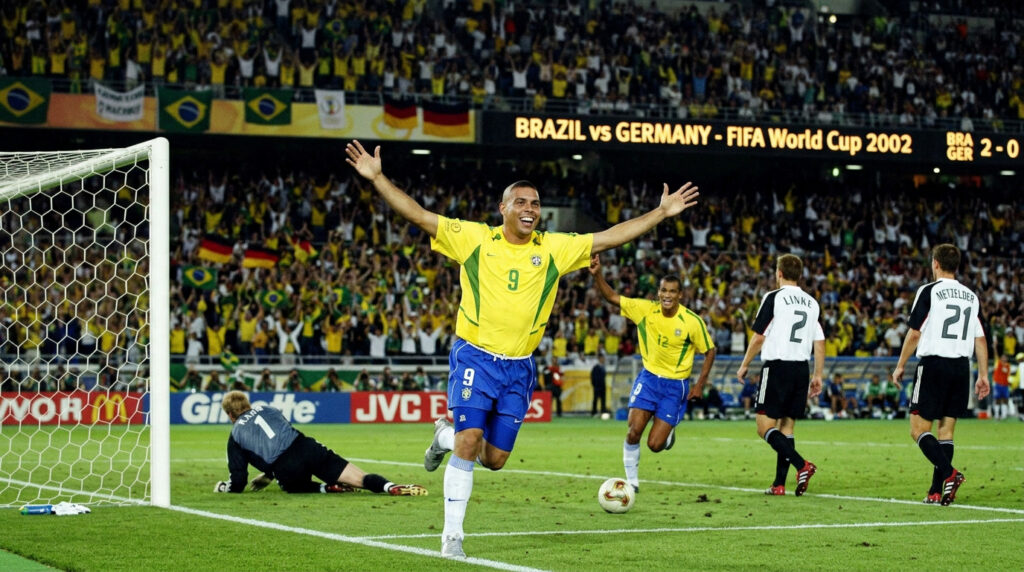
R9 fought through one of the hardest recovery journeys in professional sports. Through surgery, physiotherapy, strength work, and years of rehab, he came back to the top of world soccer and helped Brazil win its fifth World Cup.
That lesson still matters for athletes today. Recovery after knee injury should never be rushed. Smart training, proper rehab, mobility work, and injury prevention all play a major role in long-term performance. The best athletes in the world understand that recovery is not optional. It is part of winning.
R9 was truly one of a kind. As the next FIFA World Cup approaches, here at Performance One we keep training and preparing athletes who dream of competing at the highest level.If you want to train like the pros, recover like the pros, and prepare your body like the pros, become a P1 member today. Because for elite performance, recovery is not optional. It is foundational to winning.
