
The knee is one of the most complex joints in the body. We rely on it for running, squatting, jumping, cutting, and even walking downstairs.
Is knee discomfort after exercise really a normal thing? Sometimes it is just part of training stress. Other times, knee pain from a workout is your body asking for attention.
So when should you pay attention to knee pain? Always. Discomfort can be a sign of overtraining, poor mechanics, or a knee injury from the gym that has not fully recovered. It can also point to small issues that are easy to fix if you catch them early.
In this article, we break down the causes of knee pain and how to tell normal discomfort from unusual pain. We also cover what to do when symptoms show up, along with 10 safe exercises for knee pain recovery to help you move better, train smarter, and protect your knees long term.
Common Causes of Knee Pain from Workout
The knee is a very versatile hinge joint. Think of all the ways it moves and works during the day. It bends and straightens, controls rotation, absorbs impact, and supports the body under load.
We use our knees to run, walk, kneel, squat, jump, sprint, and step up or down. Those movements feel simple, but they rely on complex knee anatomy. Bones form the structure, ligaments keep the joint stable, tendons connect powerful muscles, and the meniscus cushions every step.
Because of that, even simple movements can sometimes lead to pain. Knees are strong and flexible, but they are not indestructible. Most people will experience knee pain from a workout at some point in their lives. In sports, knee injuries have also been on the rise. According to Project Play, they have increased by about 26% in recent years.
Runners, athletes who sprint, basketball players who jump, and powerlifters who squat all place high demands on their knees. How do they keep knee pain and injury away? The right knee exercises, balanced workouts, and proper technique.
For athletes who have had an accident or a severe injury like an ACL tear, the reason for pain is usually clear. We have already covered exercises and recovery strategies for those cases in our guides on healing a sprained knee and ACL injury recovery.
But for people with generally healthy knees who still feel discomfort or knee pain after exercise, the question is different. Why does it happen?
Let’s break down the most common causes of knee pain and start with the simplest ones:
- Everyday fixables: Sometimes knee pain comes from very basic things. Worn-out shoes, or footwear that does not match your sport. Also, running on hard or uneven surfaces. These are often easy to fix by changing shoes or adjusting where you train.
- Training habits: Knee pain can also come from how you train. Overtraining is a big one. Skipping warm-ups or cool-downs is another. Sudden increases in volume or intensity can overload the knee faster than it can adapt. All these habits are fixable, but they require awareness and consistency. This is where good coaching makes a big difference.
- Posture and alignment: Imbalances in the hips, back, or feet can shift stress onto the knee. Repetitive movements at work or in training can create compensations over time. This is a common reason people feel knee pain from squats or running. We can address this with a proper assessment and corrective training.
- Previous knee injuries: A past knee injury can still affect how the joint handles load, even years later. If ligaments, tendons, or supporting muscles never fully recover, the knee may become more sensitive during workouts.
- Medical conditions: In some cases, knee pain is linked to medical conditions like osteoarthritis, rheumatoid arthritis, gout, or inflammation. Age can play a role, but training history and load management matter just as much.
Types of Knee Pain & Symptoms
What’s perfectly normal? Some knee soreness or mild discomfort after working out, that’s usually nothing to worry about. Muscles and joints adapt to training stress, it’s just part of getting stronger.
But what if the pain is persistent or sharp? That is when it is time to pay closer attention.
Let’s clear the air first and talk about how a severe knee injury usually feels, such as an ACL or meniscus tear. In those cases, pain is often sudden and sharp. Swelling shows up quickly. Most people know right away that something is wrong because putting weight on the leg becomes very difficult. This is not the type of knee pain you push through, and it’s definitely something you need to check with a doctor.
Then there is chronic knee pain. This pain is usually more gradual and builds over time. It may feel dull, achy, or tight during or after activity. Common examples include knee tendinitis, bursitis, or runner’s knee. You can often still move, but the pain keeps coming back, especially during workouts or longer sessions.
Mechanical knee pain is also common, especially in athletes with many years in their sport. This often comes from posture, alignment, or movement patterns. Instead of sharp pain, you may feel discomfort, stiffness, or sensations like clicking or locking. At first it may seem minor, but over time it can start to limit training if you don’t treat it properly.
Not all knee pain after exercise means injury, but these patterns matter. Listening early makes recovery much easier, so let’s first go over what to do immediately after knee pain appears.
Immediate Relief & Recovery Tips
If you feel knee pain, the safest first step is always to check with a medical professional. But in the meantime, there are simple things you can do to manage symptoms and get through the moment.
First, stop the activity that is causing the knee pain. Pushing through pain often makes things worse.
Second, apply ice to help reduce swelling and calm irritation, especially if the knee feels warm or tender.
If the knee pain after exercise is mild and manageable, here are a few short-term adjustments that often help:
- Choose low-impact training for a few sessions. Activities like cycling, swimming, or controlled strength work allow the knee to stay active without excessive stress. We’ll cover some of these in our top 10 knee exercises next.
- Avoid running on hard surfaces. Keep in mind that worn-out shoes can act like uneven flooring. If you are a runner, replacing your shoes regularly matters. For most runners, that means roughly every six months, depending on mileage.
- Use knee tape if it helps you feel more supported. Many athletes use taping as a temporary tool to reduce discomfort and improve confidence during movement.
- Do not skip your warm-up or cool-down. Gentle mobility before training and light stretching afterward help manage stiffness and support recovery.
Up next, we’ll look at what you can do to build stronger, more resilient knees and move toward pain-free training again.
Exercises for Knee Pain
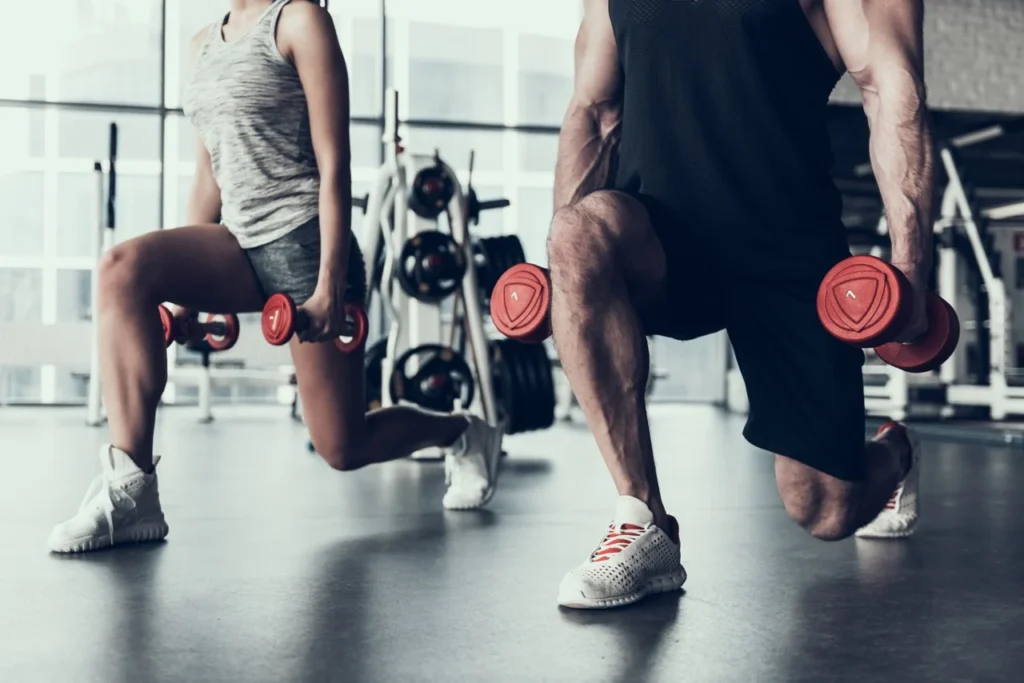
Here we selected 10 exercises that can help reduce knee pain, restore movement, and rebuild strength around the joint. They are low-impact and generally safe when done with good form and proper progression. When guided by our expert physical therapists, these can play a key role in long-term knee health.
Remember: Move slowly and always stay within a pain-free range. The goal is control, not pushing through discomfort.
Knee Extension While Sitting
This is one of the simplest ways to wake up the quadriceps without putting stress on the knee. You should feel a gentle activation in the front of the thigh, with a smooth motion and no pinching in the knee.
- Slowly straighten the working leg until the heel lifts
- Hold for 3 to 5 seconds
- Lower with control
- Repeat
Heel Slides
Heel slides help restore knee motion and reduce stiffness. They are especially helpful when bending the knee feels tight or restricted.
They should feel a gentle stretch in the front of the knee as the leg bends and straightens.
- Slide your heel toward your glutes
- Pause at a comfortable bend
- Slide back down to a straight leg
- Repeat
Quad Set
This exercise re-activates the quadriceps and helps support knee stability, especially when pain has caused muscle shutdown. As you perform the movement, you should feel a firm squeeze in the quad and notice the kneecap lifting slightly.
- Sit or lie with one leg straight
- Press the back of your knee gently toward the floor
- Tighten the thigh muscles
- Hold for 3–5 seconds
- Relax and repeat
Short Arc Quad
Short arc quads strengthen the knee through a controlled range without full loading. When doing these, you should feel the quad working as the knee straightens in a smooth and controlled way.
- Lie on your back with a rolled towel or pillow under your knee
- Tighten your quad and lift the heel to straighten the leg
- Lower slowly back to the starting position
- Repeat
TKE (Terminal Knee Extension)
TKEs help improve knee control at the end of extension, which is good for walking, running, and squatting mechanics. During this knee exercise, you should feel the front of the knee and quad engaging at the end of the motion.
- Anchor a resistance band behind you at knee height
- Loop the band behind one knee and stand tall
- Start with a slight bend in the knee
- Straighten the leg against the band
- Hold briefly, then return to a soft bend
Straight Leg Raises
This next knee exercise builds strength in the quad while keeping the knee joint stable and supported. You should feel the quad and hip flexor working, without the knee wobbling.
- Lie on your back with one knee bent and the other leg straight
- Tighten the quad of the straight leg
- Lift the leg about a foot off the floor
- Lower slowly and repeat
Mini‑Squats
Mini-squats reintroduce knee loading in a safe and controlled way. They are a good option, especially when full squats still feel uncomfortable. When performing these, it’s important that you feel the quads and glutes sharing the load.
- Stand with feet shoulder-width apart
- Sit back slightly as if reaching for a high stool
- Keep your knees tracking over your toes
- Stand back up tall
- Repeat
Wall Sit
Wall sits build quad endurance without movement at the knee, which can help reduce irritation while building strength. You should feel a steady quad burn and even pressure through your feet.
- Stand with your back against a wall
- Slide down into a shallow seated position
- Hold for 10–30 seconds while breathing steadily
- Slide back up and repeat
Isometric Lunge Hold
This exercise improves knee and hip strength while training control in a split stance. You should feel the front quad and glute working, with the back leg acting as light support.
If you feel holding a lunge is too difficult, you can place your hands on your hips or use light support.
- Step into a split stance with one foot forward
- Lower into a small lunge
- Hold the position for 10–20 seconds
- Stand tall and repeat
Stationary Biking
Cycling is a go-to recovery exercise. No impact, helps increase blood flow and knee mobility. Just keep the resistance low to start and focus on smooth, steady movement. You should feel warmth and gentle mobility in the knees, without sharp pain.
- Set the seat so your knee stays slightly bent at the bottom of the pedal stroke
- Start with low resistance
- Pedal at an easy, steady pace for 5–10 minutes
- Increase time or resistance gradually as tolerated
How Expert Physiotherapy Can Help
With these 10 exercises for knee pain, you now have a clear overview of what you can do to stay active while recovering. The key is to keep impact low and movements controlled until your knee is ready to return to normal training.
The important thing is you should never feel knee pain from working out. Mild discomfort can be part of the process, but pain is a signal to adjust, not push harder. Learning to listen to those signals is what keeps athletes training long term.
If you need guidance with knee pain after exercise, managing joint stress, or simply want to train with confidence, our team is here to help. With over 20 years of experience, we have helped young athletes, elite professionals, weekend warriors, and seniors keep their bodies strong and moving well.
Join our community and become a member today. Let’s keep you moving, healthy, and training injury free.
