
Sports biomechanics is more than 3D models and data. Working at this level of detail reflects precision, perseverance, and strength. How elite athletes become true champions.
Physics, mechanics, anatomy. Biomechanical analysis might sound like something only scientists understand. And yes, it can get complex. But here, we break it down in the simplest and most practical way, so you can actually use it.
Think of it like this: A race mechanic fine tunes a NASCAR engine to make it faster and more powerful. In sports biomechanics, we fine tune an athlete’s movement patterns with that same level of precision.
Let’s look at how biomechanical analysis works, its core principles, and five real athlete examples of its impact in sports.
What Is Biomechanical Analysis?
In simple terms, a biomechanical analysis tracks your movement patterns to help you move better. It shows how your joints and muscles work during a specific action, and with this information, we can improve technique, performance, and reduce risk of injury.
In sports biomechanics we look at how athletes create force. We study torque, swings, jumps, shots, and changes of direction. We use specific tech tools to get a full kinetic chain assessment: how every joint, muscle, and tendon contributes to a movement or stance.
The human body has more than 600 muscles and over 300 joints. Each one plays a role for stability and motion, so imagine how complex the kinetic chain really is.
In the term “biomechanics”, Bio means life, and mechanics refers to the parts and forces that make something work. This means that with biomechanics we get the science of how the living body moves.
With biomechanics we bring together anatomy, mechanics, and physics. We study the athlete and the environment. That includes the ball, racket, playing surface, and even the distance the athlete needs to cover. Everything affects performance.
When performing a sports biomechanics assessment, we go granular and look at speed, force, joint angles, distance, and power output. Some examples include:
- Running and gait analysis: stride length, ground reaction forces, joint efficiency.
- Vertical jump: explosive power, hip and knee angles, force production.
- Tennis serve: shoulder rotation, racket acceleration, full kinetic chain sequencing.
- Volleyball spike: takeoff mechanics, arm swing, landing forces.
- Baseball pitching: shoulder and elbow stress, sequencing, velocity versus injury risk.
How do we measure all this? With the right principles and the right tools.
The 5 Components of Biomechanics
Before we get into what happens inside a biomechanical lab, let’s look at the five core components of biomechanics:
- Motion: This is how the body or an object moves through space. We look at speed and acceleration. Think of a sprinter driving forward or a ball flying after a clean hit.
- Force: The push or pull that makes movement happen. It can be the force from your foot hitting the ground during a stride or the impact of a racket striking a ball.
- Momentum: This is mass combined with velocity. It shows how much power a moving body carries. A sprinter at top speed or a baseball launched off the bat are great examples.
- Levers: Your arms and legs act as levers, with joints working as pivot points and muscles creating effort. You can see this in a basketball shot, a swing.
- Balance: This is how you keep your body stable. It is your center of gravity staying over your base of support while you run, jump, cut, swing, or even stand still.
Based on these five components, we measure things like: angular velocity, joint torque, momentum during extension or flexion, and the compressive forces your joints absorb.
Tools For Biomechanical Analysis
A biomechanical lab is where athletes repeat their sports movements. It’s a room where athletes replicate plays and movements connected to tracking tech.
Here are the most common tools used in a biomechanical analysis session:
- Electromyography (EMG): Sensors placed on the skin measure muscle activation. They show when a muscle fires, how strong the contraction is, and whether the muscles are working together the way they should.
- 3D motion capture systems: Reflective markers and sensors track movement in three dimensions. These systems are great for swing sports like tennis, baseball, and golf. Markers go on key joints such as the ankles, knees, hips, and shoulders to reveal precise footwork and arm mechanics.
- High speed cameras: These record at very high frame rates. Coaches and clinicians can slow the footage down and see the fine details of a movement. This helps catch technique issues that the eye often misses.
- Force plates: These platforms measure ground reaction forces during jumps, steps, or balance drills. They show how much force an athlete applies and how it spreads through the body. Force plates are especially useful in basketball, volleyball, and soccer.
- Biomechanical software: This is where all the data comes together. The software processes speed, distance, angles, and joint forces with precision. Kinovea is a great open source option for basic analysis. For advanced work, many labs use Dartfish, Enable, PitchAI, iSen, Folio3, or GaitOn.
All of these tools can be used alongside regular sports equipment like treadmills, bats, rackets, dumbbells, or even a full pitching mound.
Biomechanics in Athletic Training & Performance
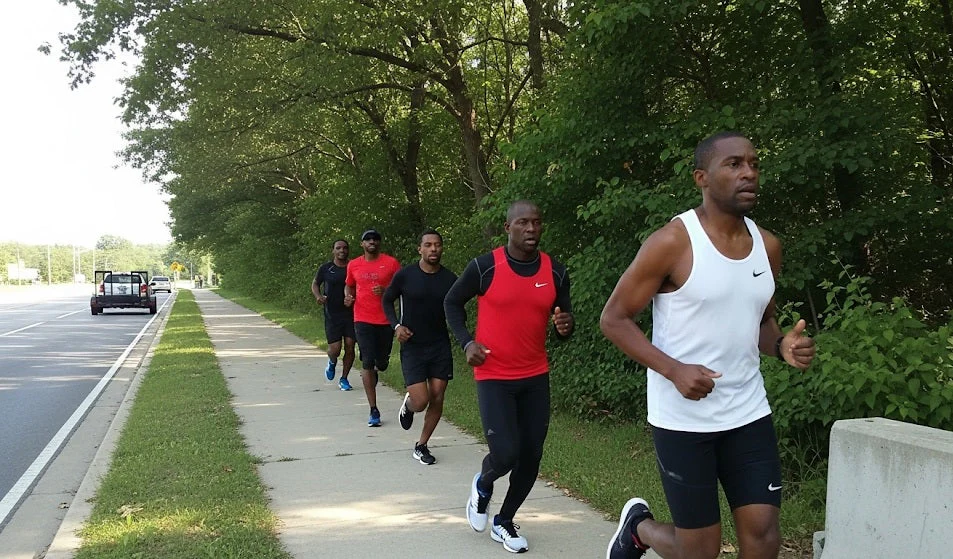
The focus of biomechanical analysis changes based on the demands of each sport. Running, jumping, swinging, and cutting all involve different gaits, rotations, and extension patterns.
So let’s go through five biomechanics examples in sport.
Running and Gait Biomechanics
When running, every step depends on how efficiently the legs strike, push, and recover. Hips, core, arms, all come into play.
With a biomechanical analysis of running, we study body angle, stride length, leg extension, foot strike, and overall gait efficiency.
Usain Bolt is one of the best examples of effective running biomechanics. He covered 100 meters in 9.58 seconds using only 41 strides, three fewer than most elite sprinters. Key elements of his gait analysis shows how his long frame, explosive power, and perfect timing create such efficient mechanics.
- Stance phase: Quadriceps stabilize on foot strike while calves push the ground away.
- Flight phase: Hamstrings pull the leg through to maintain stride length.
- Force transfer: Each step channels massive ground reaction forces upward.
- Neuromuscular timing: Millisecond coordination keeps the stride balanced and efficient
Baseball Biomechanics for Pitching
Pitching biomechanics show that a throw begins long before the ball leaves the hand. The legs generate force first. The hips rotate to load energy. The torso transfers that power up the chain to the shoulder, elbow, and wrist.
Aroldis Chapman is the perfect biomechanics example for baseball. His fastball reaches 105 mph, supported by shoulder rotation at over 7,600 degrees per second. A biomechanical analysis of pitching reveals a flawless kinetic chain from the ground to the fingertips.
- Leg drive: Lower body creates initial momentum through push off.
- Hip shoulder separation: Builds torque and stores elastic energy.
- Acceleration: Shoulder and forearm muscles fire in sequence through release.
- Deceleration: Posterior muscles absorb force and protect the arm.
Basketball Jump Shot Biomechanics
A jump shot relies on rhythm. Power starts in the legs, stability comes from the core, precision finishes in the wrist. If one step breaks down, the shot loses accuracy.
Steph Curry is one of our favorite examples of efficient basketball biomechanics. ESPN Sport Science found that when he shoots from deeper range, the only major change is an increase in wrist flexion velocity. A faster, sharper snap adds power without disrupting rhythm.
It’s a clean jump shot that involves:
- Lower body: Legs provide vertical lift and a stable base.
- Core control: Keeps alignment steady through the jump.
- Arm path: Shoulders and elbows move smoothly toward release.
- Wrist speed: A quick flexion adds distance and spin.
Tennis Swing Biomechanics
Biomechanical analysis in tennis focuses on rotation, balance, and timing. The legs push upward and the hips unwind. The core transfers power through the shoulders. The racket becomes the final link in the kinetic chain.
What better example of tennis biomechanics than Serena Williams? Her serve often reaches 170 km/h, well above the tour average. Her backhand also shows elite efficiency from the ground up:
- Leg drive: Generates vertical lift and base stability.
- Core rotation: Transfers torque for power and control.
- Wrist release: Adds racket speed and topspin.
- Follow through: Maintains momentum and reduces tension.
Golf Swing Biomechanics
The golf swing is built on stored energy. Every rotation and shift sets up the body to create maximum force at impact. The feet and legs anchor the motion, the hips and core rotate to load power, and the arms guide the club through the strike.
Tiger Woods mastered this sequence better than anyone. At his peak, he produced clubhead speeds over 120 mph with perfect timing and balance.
He is the best example of how biomechanical analysis for golf swings works:
- Setup: Stable posture forms the foundation.
- Backswing: Shoulders coil and hips load like a spring.
- Transition: Energy shifts toward the lead leg and torso.
- Impact: Rotation releases power directly into the clubface.
- Follow through: Smooth finish maintains speed and control.
The Role of Physiotherapy in Biomechanical Correction
Besides elite sport training, biomechanical analysis is also very useful for recovery, rehabilitation, and everyday movement health. Motion analysis and gait biomechanical analysis help uncover instabilities, weak muscles, or joint restrictions.
People can get injured when doing really simple things. From lifting a box at work, or reaching too far while cleaning. Even just taking the wrong step during daily chores. Biomechanics helps our physical therapists see why these things happen.
Once we get the assessment data, it’s time for fixes. For athletes, the focus is usually on technique, angles, and posture during high speed movement.
For others, the goal is to move safely through daily life. Seniors, office workers, and anyone recovering from injury benefit from understanding their biomechanics. The activity might be lighter, but the need for good movement patterns is still essential.
With a biomechanical analysis, we can study standing, walking, sitting, and overall posture. We can spot overuse patterns, muscle imbalances, and compensations that often go unnoticed.
Why Choose P1Athlete for Biomechanical Analysis?
To get the most out of biomechanical analysis, you need two things. The right equipment and the right experts. At P1, you get both.
Our facility is loaded with advanced tools for fitness, performance, and recovery. We use data driven methods, from wearables to 3D motion analysis, to give you a complete picture of how your body moves.
But the real difference is our team. We know how to read your biomechanics and turn that information into personalized training and recovery plans. We have helped hundreds of athletes prepare for their season, reach peak performance, and build better technique without risking injury.
We go beyond the numbers in a biomechanical analysis report. We stay with athletes during each session. We watch movement patterns, correct form, and track progress.
They want to stand out. We want them to stand out. Whether it is a stronger swing, a faster stride, or a clean 30 foot shot, we go for it.
The same care goes to our wellness and rehab community. We tailor every session to help clients feel better than they did before. We slow things down when needed, and we track how joints and muscles heal.
Train Smarter With Biomechanical Exercises
All this sounds new? Not to us. We have been helping people move better for more than 20 years, and we take that experience into every session.
A biomechanical analysis can reveal the winning habits behind your best plays. It can also help you understand the root of chronic pain and finally move without discomfort.
Every sports biomechanics session in the lab is eye opening. It even gives many athletes more motivation than ever. Once they see how their body moves, and how quickly it can improve, everything clicks.So if you are ready to train smarter, schedule a session with us. Let’s uncover the secrets of your biomechanics and take your performance to the next level.
